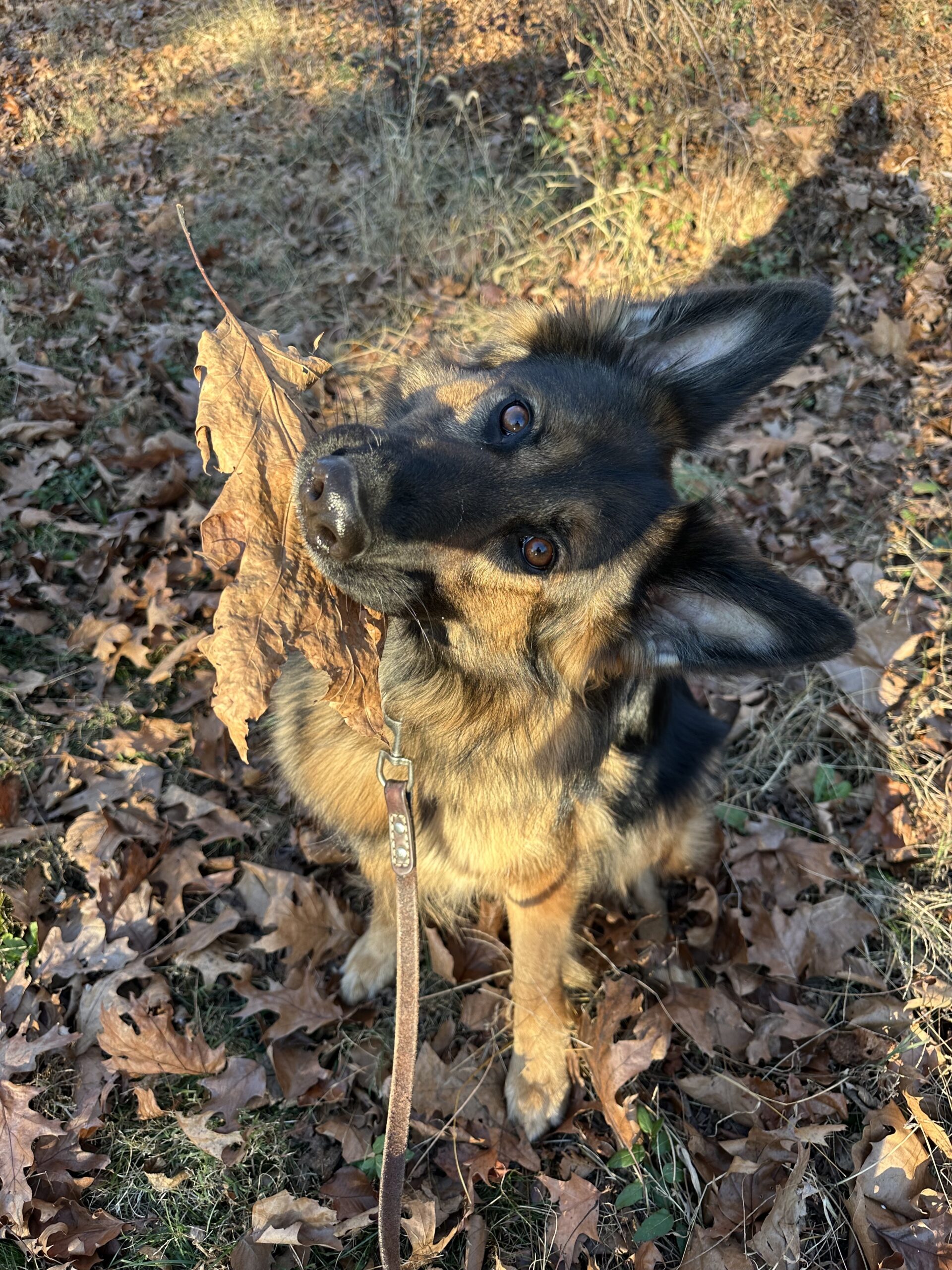
As a pet owner, one of my favorite activities to share with North is our hiking adventures. I love hiking and experiencing the various terrains and views that welcome us on each hike. Hiking is so fun and rewarding, but I’ve found it to be much more enjoyable with North by my side. Every adventure with North is that much more exciting, and our adventures become unforgettable moments together that I’ll always love reflecting on. When hiking with dogs (or even just your own dog!), it’s important to be properly prepared. Not just for yourself, but for your dog too. Safety first, always! If you’re new to hiking with dogs, this guide will help you feel fully prepared for safe, fun adventures.
Planning a hike with your dog? Make it stress-free! Grab our Hiking With Dogs Checklist for free.
1. Know Your Dog’s Limits Before You Go
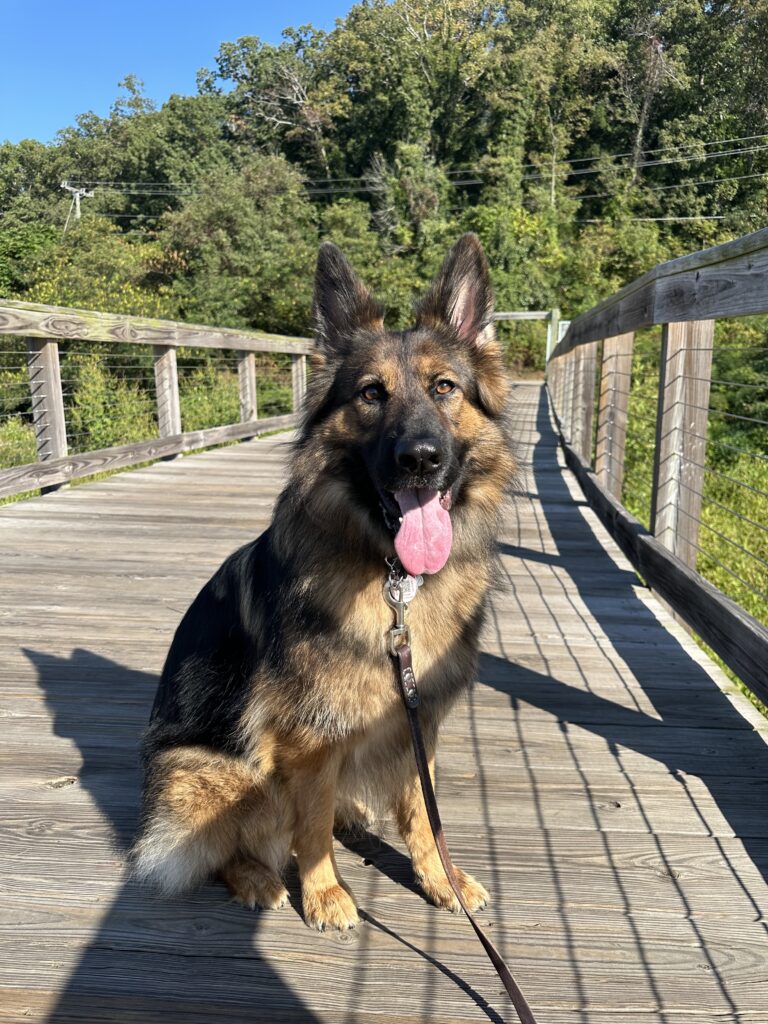
One thing I’ve learned from hiking with dogs over time is that every dog handles trails differently. While exploring and going on a hike with your dog sounds like an exciting adventure (it actually is), it’s essential to understand your dog’s breed, consider their age, and assess their fitness level. This is not to say your dog can’t ever go hiking, but to be fair, consider your dog’s overall health before jumping into an 8-mile hike with rock scrambles. It would be like asking a person who hasn’t run a mile in their life to complete a half-marathon on a whim.
2. Must-Have Essentials for Hiking With Dogs
As an Amazon Associate, I may earn a small commission if you purchase through the Amazon links in this post—at no extra cost to you.
Water & Hydration
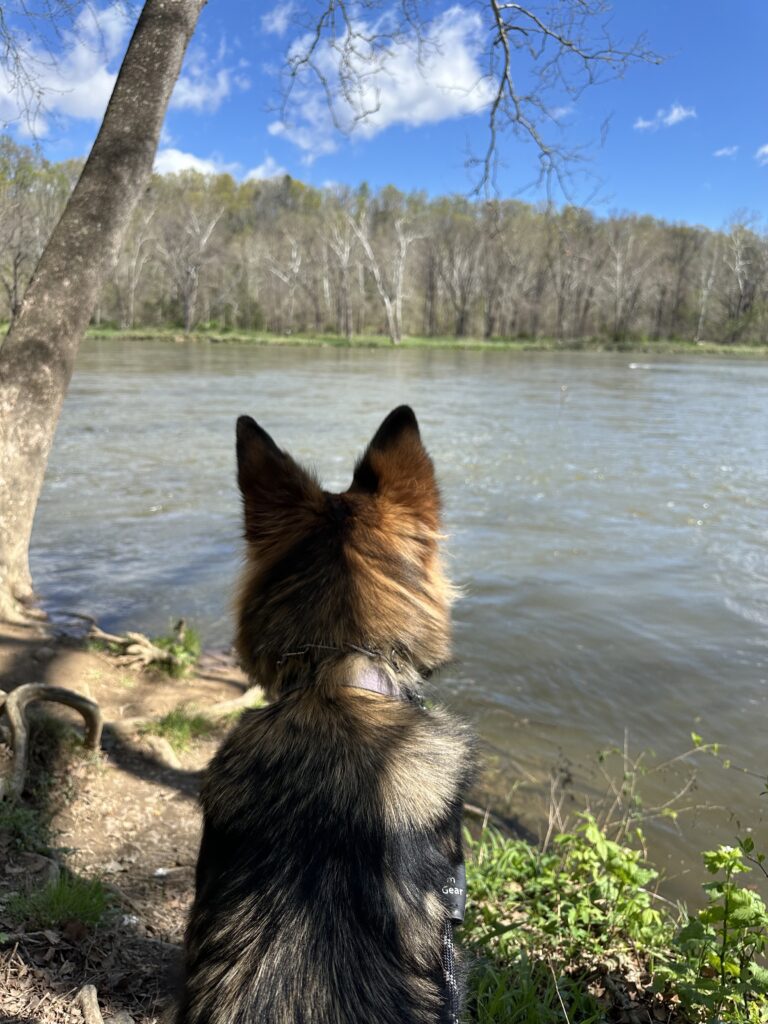
Water. This is a non-negotiable. Hydration is one of the most important parts of hiking with dogs that cannot be ignored. The amount of water to bring is dependent on how far you will be hiking, the size of your dog, and, if it’s in the warmer months, you will want to bring even more water for your dog. I always bring more than I think I’ll need for North. She drinks a lot of water at home, so hiking means we are engaging in a more strenuous exercise, which will require that much more water. For reference, North is a 75 lb GSD. I bring at least one gallon of water for North for a 4-5 hour hike. To date, it has been plenty of water for her. I’d rather have more than I need, always.
Collapsible bowls. I personally use the Ruff Bark Bowl. I love this bowl. It’s easy to pack away with all of North’s hiking essentials. It can easily hang off your hiking bag with the clip that is provided with the bowl, and super easy to wash.
Avoid Overheating. This is most concerning during warmer months. North, a long-haired GSD, can overheat very easily in the summertime. For this reason, we typically do our big hikes in the off-season months. But I still prepare to avoid overheating at any time of the year while hiking. Know the warning signs of a dog experiencing heat exhaustion and heat stroke. It’s best to keep your dog’s paws and belly/armpit areas wet. This will help keep them cool in warmer months.
Food & Treats
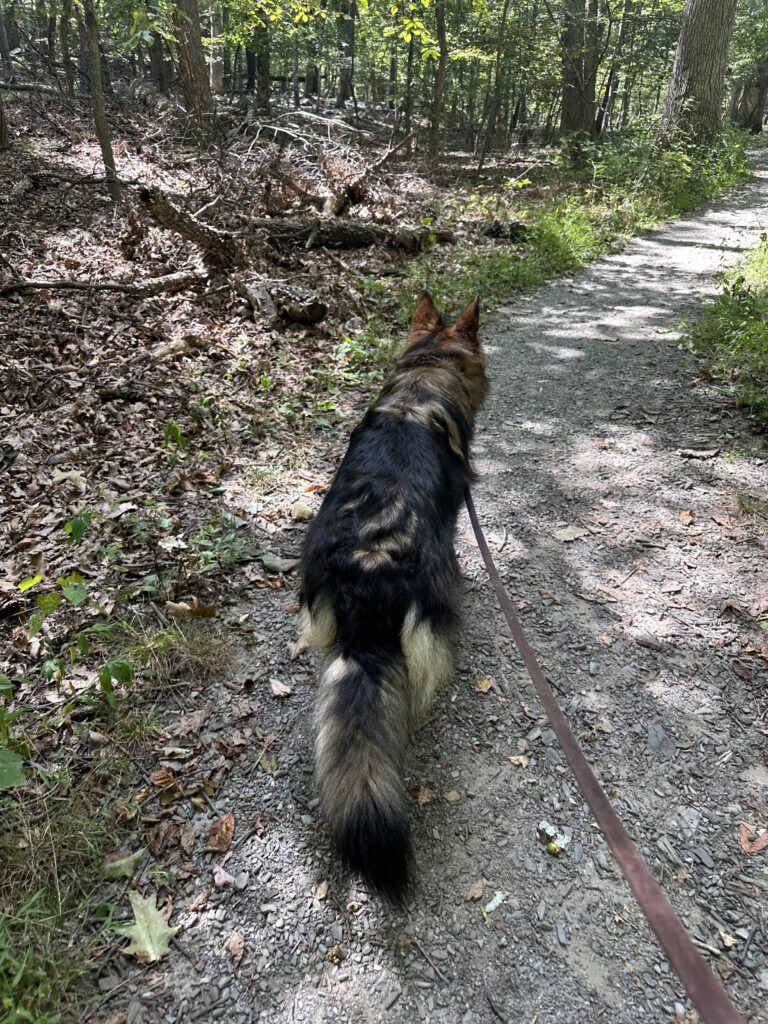
Food. Just like you need fuel for your hike, your dog does too. I always pack at least two cups of North’s food for her mid-hike snack, and it makes a big difference in her energy. When hiking with dogs, pack enough food to keep their energy steady throughout the adventure. Dogs burn way more calories hiking to the summit than they do snuggling up to you on the couch at home. Adjust the amount based on how much your dog normally eats. For reference, North eats 4 cups of food daily. She will have an additional 2 cups of food for our hike.
For a longer day hike (6+ hours), I double the food I pack for North. We usually take a break halfway through the hike, and that’s when I’ll have my own snacks and offer her about half of what I brought. If she doesn’t feel like eating right away, that’s okay—most dogs will eat when they’re ready. The important thing is to allow them to refuel.
Treats. I don’t usually bring treats for North anymore, but when she was a puppy, they were an essential part of our training and adjustment to hiking life. Treats are a great tool for puppies—or for dogs experiencing their first hikes—to build confidence on new terrain and approaching summits. Just like humans with a fear of heights, some dogs can find high elevations intimidating, so using treats to encourage and reward them can help make the experience positive.
At the end of the day, remember a well-fed dog is a happy (and safer) hiking buddy!
Leash, Harness, & Collar with ID Tags
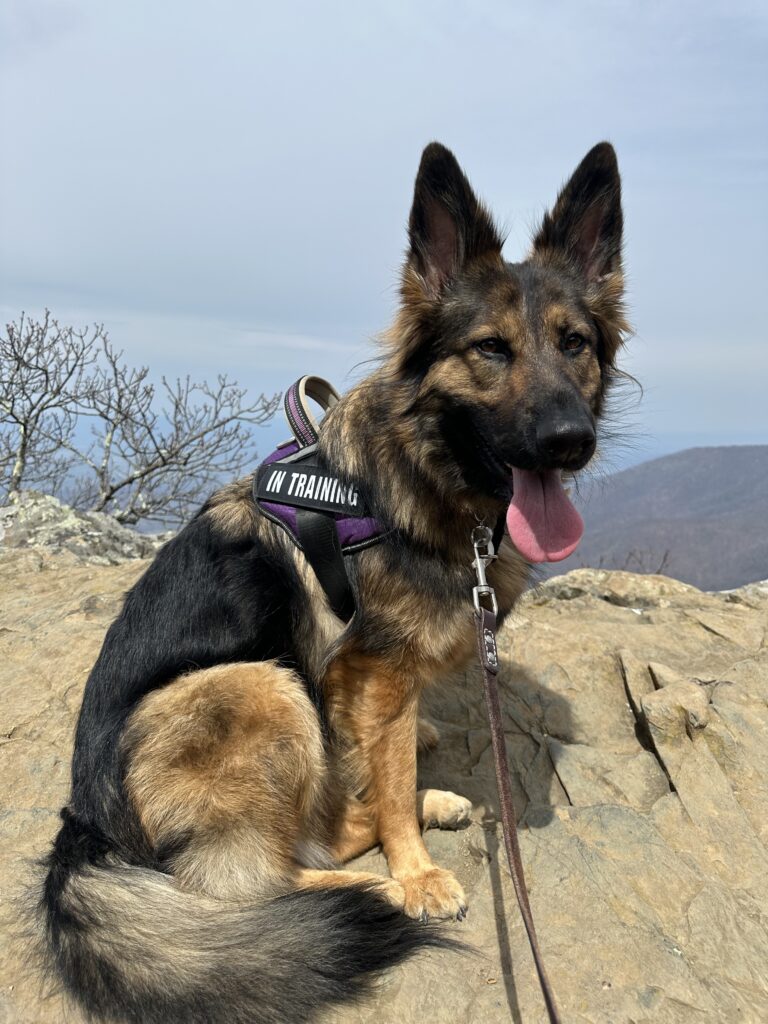
Leash. A reliable leash is a non-negotiable when hiking with dogs on busy or narrow trails. I like to use the Roam-Gear leash. It provides the dog-owner with two padded handles, one at 6 feet and the other closer to the dog, in case you need to bring your dog closer to you for any reason on a hike. It is also reflective and shock-absorbing. This is a must-have when hiking with a dog.
Harness. When North and I go hiking, we will switch between using her flat collar and her harness. It really depends on the hike. If we are on flat terrain, then she will wear her collar. However, if we are hiking on switchbacks, inclines, slippery rocks, or narrow paths, it is much easier and safer for North to wear a harness. It also helps me manage her in the event I need to quickly grab her or help her over awkward terrain or through stream crossings.
Collar with ID Tags. My favorite collar I use for North when hiking is the Made to Roam collar. It has its own handle for the owner’s use and a quick-release metal buckle. This could come in handy in the event of an emergency, and you need to remove your dog’s collar immediately. It’s made of heavy-duty nylon, which is perfect for hiking use. Her ID tags are on her collar at all times. If something were to happen to North, I would want someone to be able to identify North and bring her home or get her vet care, if required. So even though we may hike with a harness, she is always wearing her collar. It’s just a matter of where you’re hooking the dog’s leash for the hike (collar or harness).
First Aid Kit for Dogs
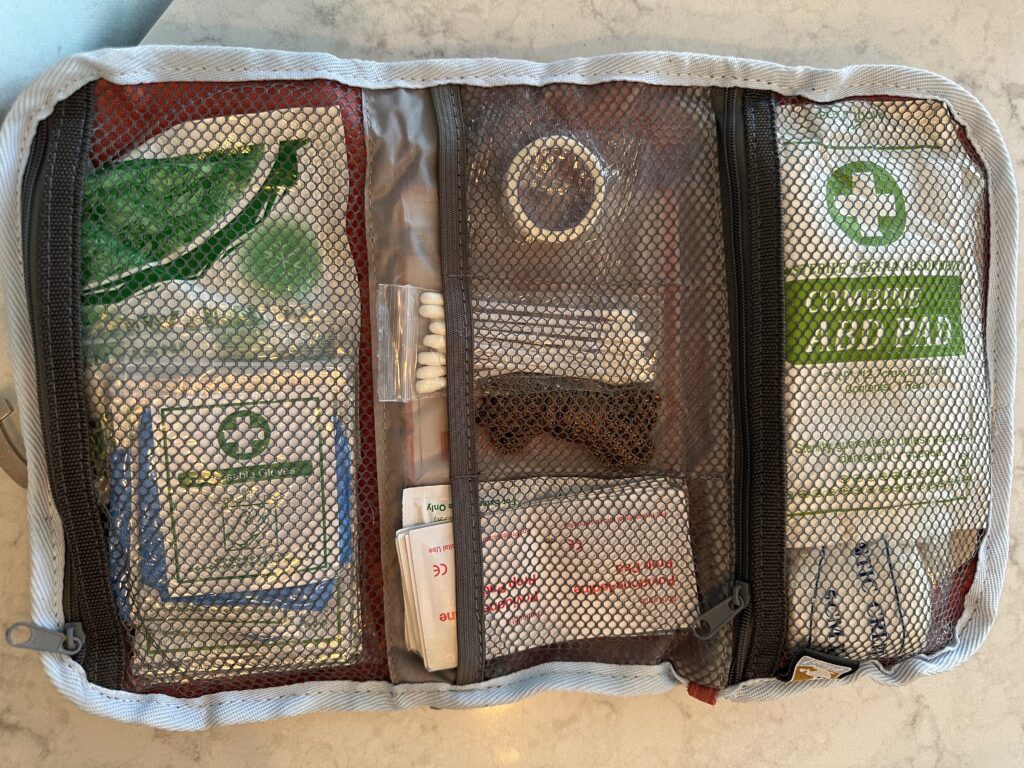
First Aid. You need a first aid kit for yourself and one for your furbaby. Your dog’s first aid kit will look a bit different than yours. I have the Kurgo Dog First Aid Kit. It’s specifically designed for dogs on the go, hiking, and/or traveling. It contains everything you could need for your dog’s emergencies, from sting relief pads, tweezers, crepe bandages, tongue depressors, and an instant cold pack to a thermal foil emergency blanket, just to name a few of the items included in this dog first aid kit.
I also like to bring paw balm in the event I need to protect North’s paw(s) for any reason. I love this specific paw balm. It goes on easily, is safe if your dog licks their paws after application, and it truly heals most injuries on the paw(s).
Waste Bags & Leave No Trace Behind
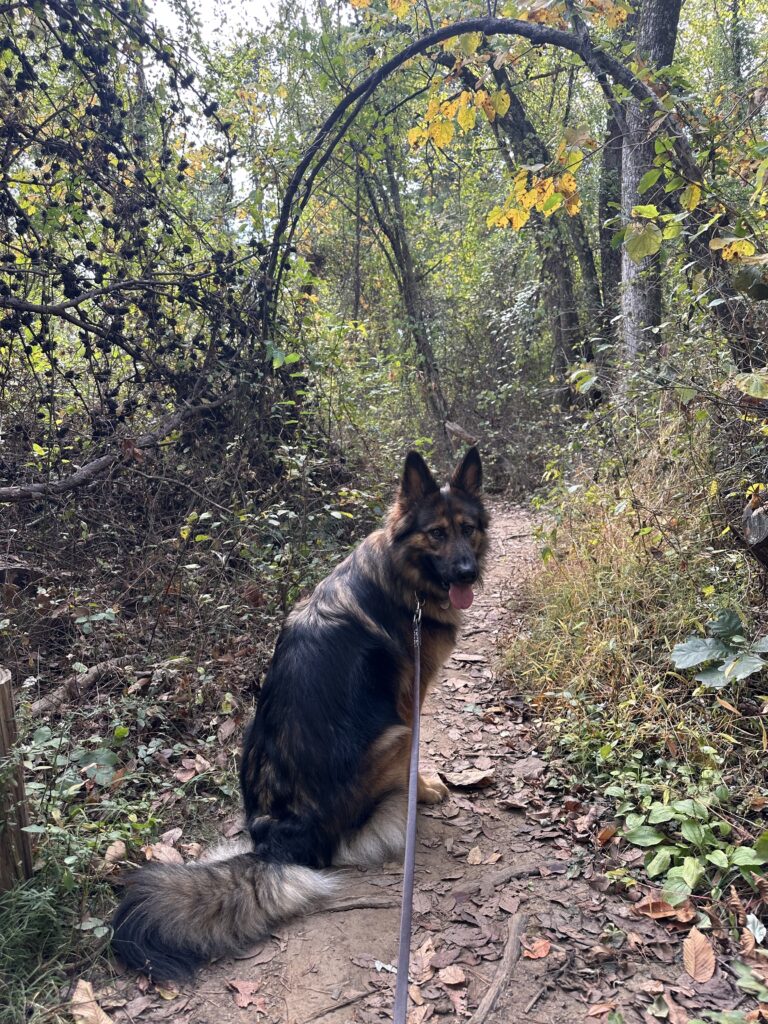
It’s such fun to go on hikes and other adventures with your dog. I love exploring with North. If you’re an avid hiker, you know that most hiking locations do not offer trash cans. I always bring disposable waste bags with me when North joins me for a hike. Let’s be honest – the last thing you want is to hike with the smell of your dog’s poo following you the rest of the way. For this reason, double-bagging your dog’s waste is essential to continuing to enjoy Mother Nature’s views without that lingering smell. Make sure to either bring a separate container or bag to put all your dog’s waste in.
Remember – just because you’re in the woods does not mean we allow and leave our dog’s waste behind. Please be mindful of your dog’s waste and clean it up each time. It’s super important that we Leave No Trace Behind on any adventures with our four-legged companions.
Weather-Specific Gear
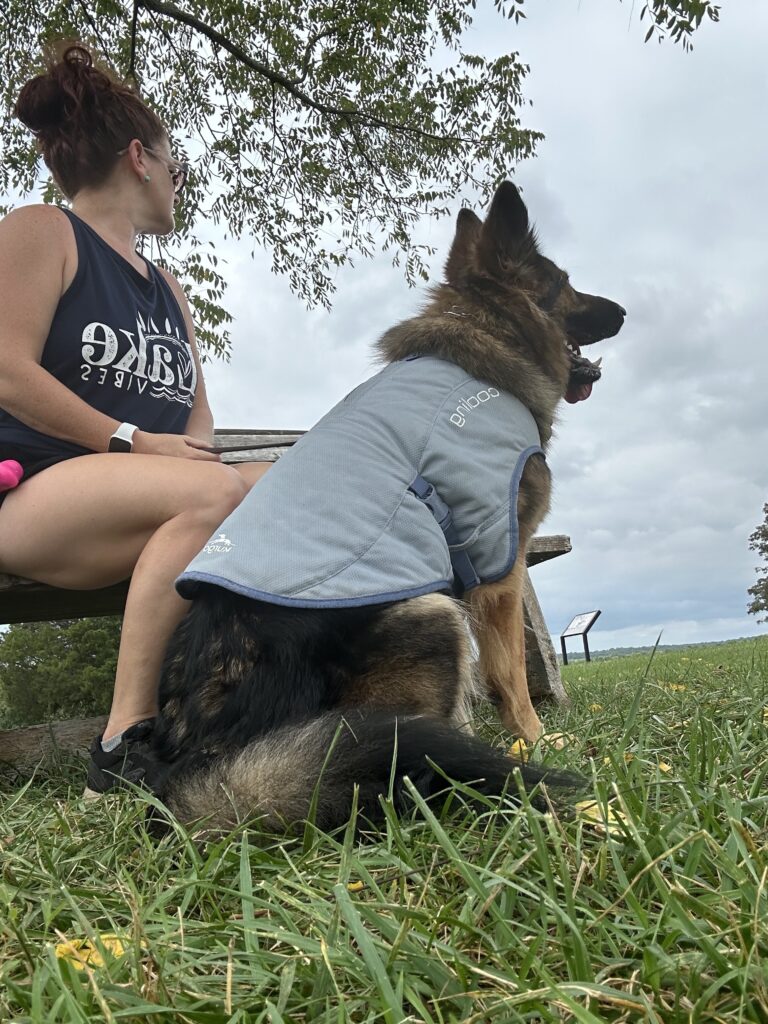
You’ll want to ensure that your dog is either kept warm or cool enough, depending on the location of the hike, season, and if there is a chance of temperatures increasing or dropping.
If it’s on the warmer side, I will bring North’s Kurgo Dog Core Cooling Vest. I find Kurgo tends to make durable and quality products for dogs, which is why you’ll see a lot of my recommendations lean towards Kurgo. This cooling vest has saved North from overheating in the New River Gorge from unexpected heat later on in our hikes.
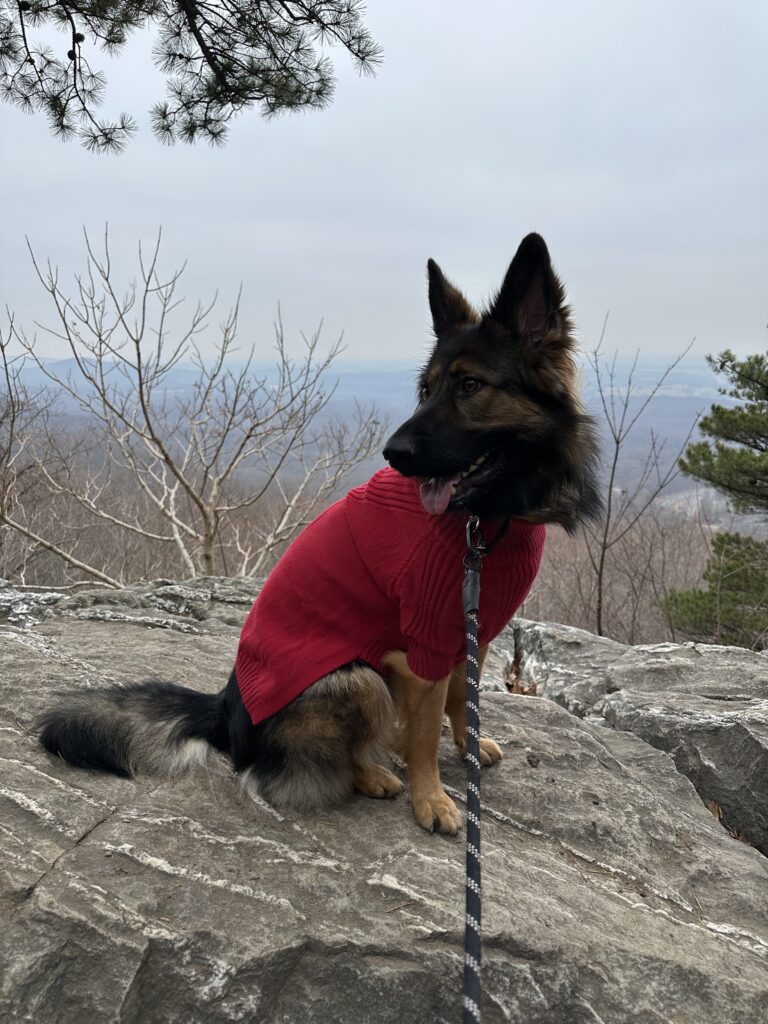
In the winter months, despite North’s long coat, sometimes it’s even too cold for North, plus who doesn’t love their dog in a wintery sweater? I found this sweater to be of good quality; it’s equally warm but not overbearing for a long-haired GSD like North, and let’s not forget how adorable she looks, too!
I haven’t used these yet, thankfully, but I always carry in my hiking bag these suspender boots, should North injure a paw. It’s always better to be prepared than not prepared at all!
You’ll find some hikes will be muddier than others or wet. I always keep a couple of towels in my car for me to wipe down North after our hikes. She loves a good towel down, too!
3. Optional Hiking Gear for Your Dog
Dog Backpack
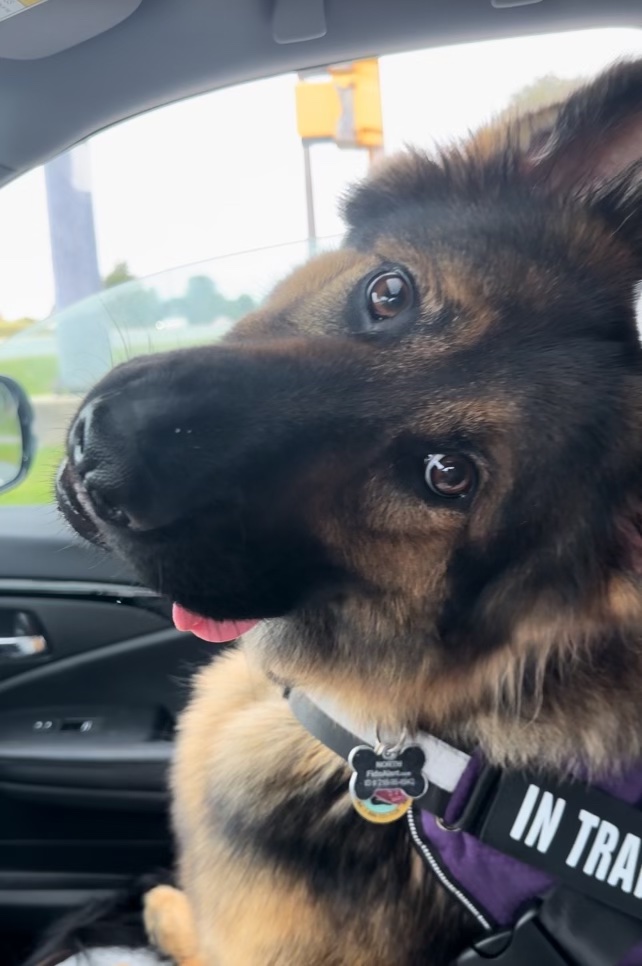
Backpacks can be extremely helpful when hiking with dogs who enjoy carrying their own essentials. However, it’s not a necessity to hike with a dog.
Introducing a backpack for your dog. North and I haven’t used a dog backpack on our hikes yet, but it’s something I plan to incorporate in the future. Before putting a backpack on your dog, it’s important to condition them gradually. Start by leaving the backpack on the floor where your dog can see and sniff it freely.
Once your dog is comfortable being near it, try holding a treat and gently pretending to place part of the backpack on them. Reward them each time they remain calm. Over time, they’ll get used to the sensation, and putting the backpack on will no longer be scary.
The key is never to just buy new gear and throw it on your dog without introduction. Doing so can create fear instead of building confidence.
How much weight can your dog carry? You’ll want to start with a maximum of approximately 5 – 7.5% of their body weight for the weight in the backpack. As they adjust to the additional weight, you can increase it to a maximum of 10-15% of their body weight. Be sure to know your dog’s health and if they have any physical concerns that would limit their ability to carry a backpack or a specified weight.
4. Training & Trail Etiquette
Trail etiquette becomes especially important when hiking with dogs, since not every dog you encounter will be friendly or trained. The video above is just a short example of the daily training I do with North for recall and obedience. What we learn out in the field applies when we are on hikes together. Training is a necessity that will save you and your dog from getting stressed out on the trail!
Basic Obedience for Safe Hiking. I get it. We all want our dogs to roam freely out in the woods and be a dog. I do too! But we need to consider the reality that not every dog we encounter while hiking is trained in obedience or recall. It is super important to ensure your dog knows their basic obedience commands, and if you’re going to have them off-leash (check leash laws for your hiking location), please be sure they have a solid recall. It’s for everyone’s safety!
Know Your Dog’s Triggers. North is dog-reactive. This does not mean she doesn’t get to engage in dog-friendly activities and adventures, such as hiking with me. We are consistently working on her reactivity, and sadly, it stemmed from off-leash dogs charging her while she’s on leash. I know North’s triggers, and I have the training and knowledge of what to do if we encounter another dog on a trail, in proximity, etc. Please know your dog’s triggers before taking them on a hike and how to manage those triggers.
5. My Personal Tips
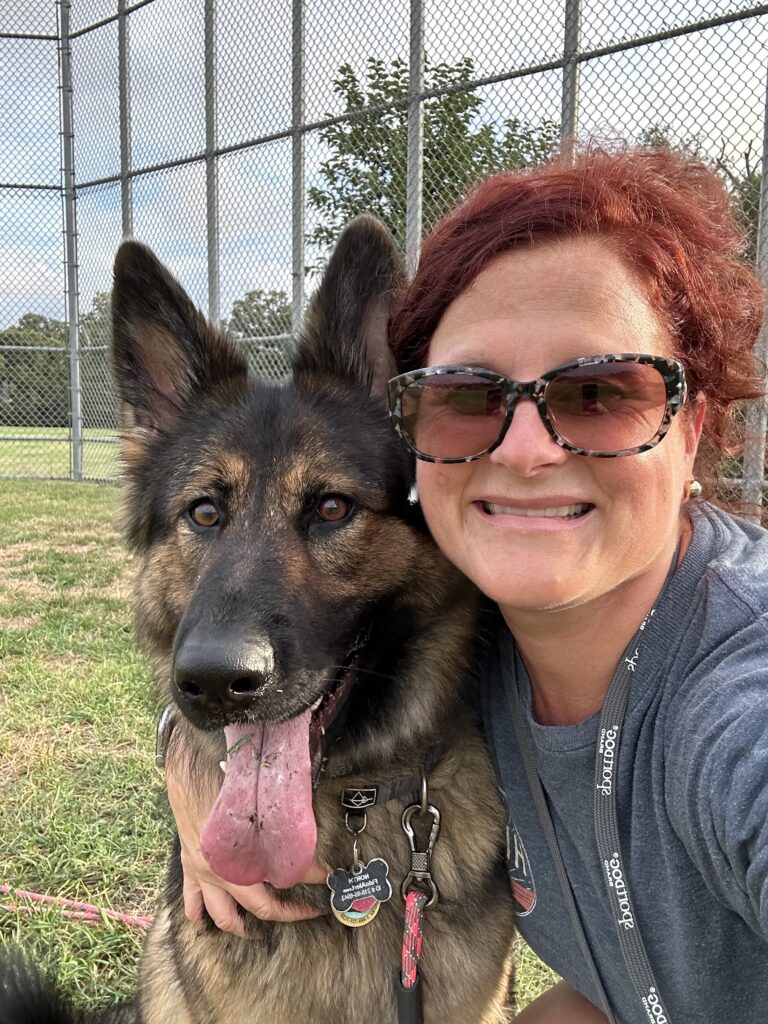
If you haven’t figured it out by now, hiking with North is one of my absolute favorite outdoor activities I get to do with her. But there are always things I need to consider before taking her on a hike, and then there are the things I’ve learned while hiking with North.
What’s worked best for me and North hiking. Knowing the trail before we go. Preparation makes hiking with dogs safer, more enjoyable, and much less stressful for both you and your 4-legged companion. It all boils down to asking myself these questions before exploring a new trail.
Is the trail too hard for a dog her size? Are there too many switchbacks and narrow pathways? What kind of terrain will we be hiking – does it change drastically throughout the hike? Will there be a possibility of encountering lots of dogs because it’s a popular dog-friendly trail?
Mistakes I’ve learned from. When North and I first started hiking together, I didn’t realize just how much water she’d need. I made the rookie mistake of not packing enough, and I ended up giving her most of mine. I went without because there was no way I was letting her run out—lesson learned. Now, I always bring more water than I think we’ll need.
I also assumed that, over time, North would just “get used to” seeing other dogs on the trail without me actually having to worry about her reactivity. That wasn’t fair to her, me, or others on the trail. She is dog-reactive, and ignoring it didn’t make it go away. Once I started incorporating the right training and techniques, our hikes became so much smoother and, honestly, way more enjoyable for both of us.
And then there’s the big one: assuming other dog owners will automatically do the right thing. They won’t. That one incident taught me everything I needed to know. Now, I always advocate for North—every single hike, every single encounter. It doesn’t matter if the other dog is friendly, trained, or “just wants to say hi.” We’re not required to greet anyone. My priority is keeping North safe and comfortable, period.
My favorite must-have item. While it’s not something you can pack in your hiking bag, it is the most important thing I bring on every hike with North: joy and a can-do mindset. There have been plenty of hikes where I wasn’t totally sure how things would go, but choosing to show up with joy—and reminding myself that we can handle whatever comes our way—always makes the adventure better. Honestly, that mindset is what turns every hike into the best hike yet.
At the end of the day, preparation is essential – but finding the joy in the adventure with your favorite pup is the ultimate goal!!
A little story for you to enjoy. North and I went on our very first hike when she was just 16 weeks old. I wanted to see what my girl could do and whether she’d love hiking as much as I do. We headed out to Compton’s Peak in Shenandoah National Park, VA—a moderate trail I felt she could handle at her young age.
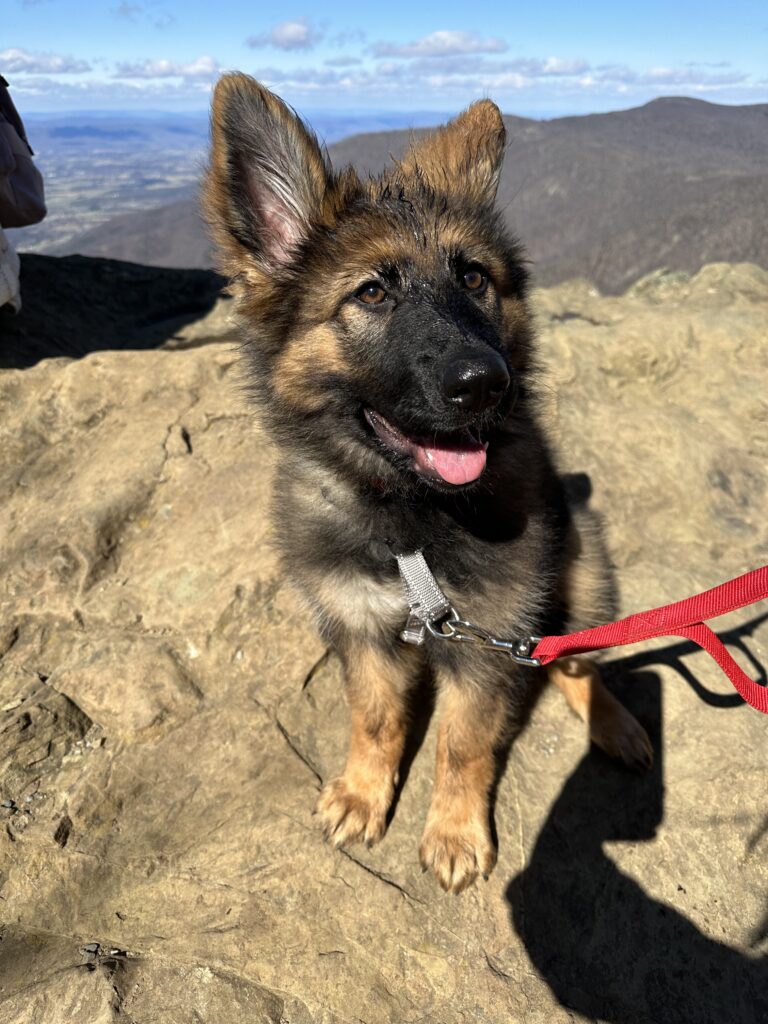
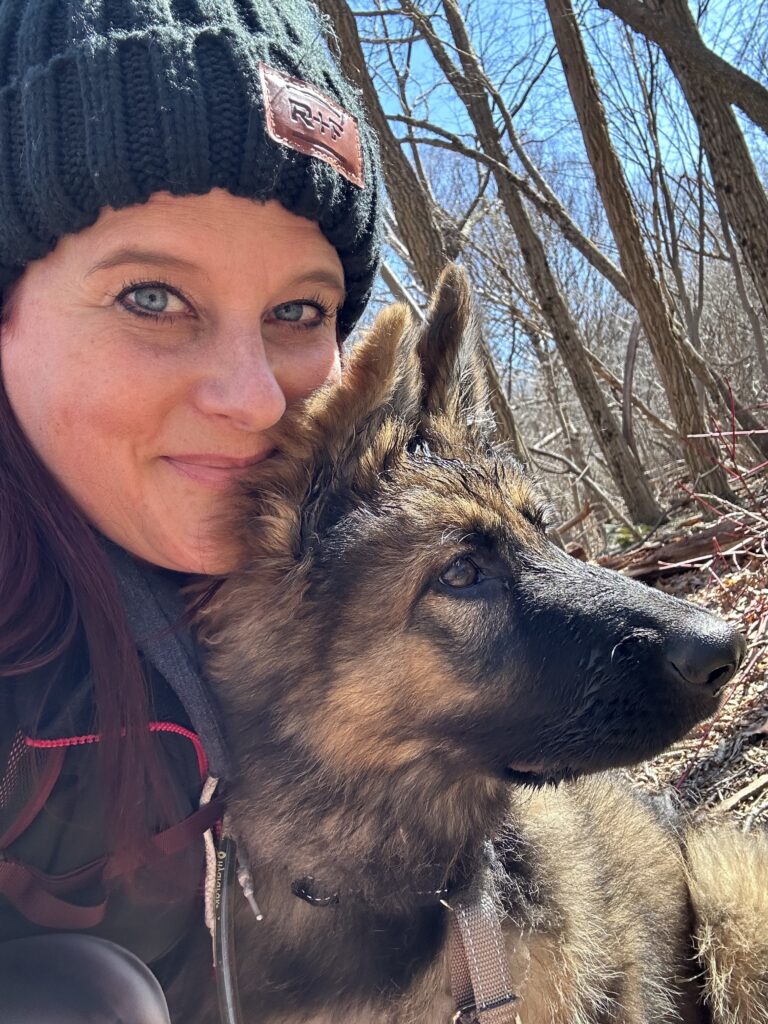
I’ll never forget the little whimpers she made, bless her heart. She was just a baby experiencing a whole new world. There’s some incline on that trail, and I quickly realized her whimpering was her way of asking for a break. So we stopped.
We stepped off to the side, and I gave her a snack, a treat, and some water. I still remember how adorable she looked sitting there beside me. And in that moment, North taught me something important: slow down. We don’t always have to rush to the top. The journey is what makes every climb worth it. From that point on, we took our time—soaking in the views, resting when needed, and enjoying each other’s company. To this day, when North and I adventure anywhere, a hike or just a simple walk in the park, we slow down and enjoy every lasting moment together.
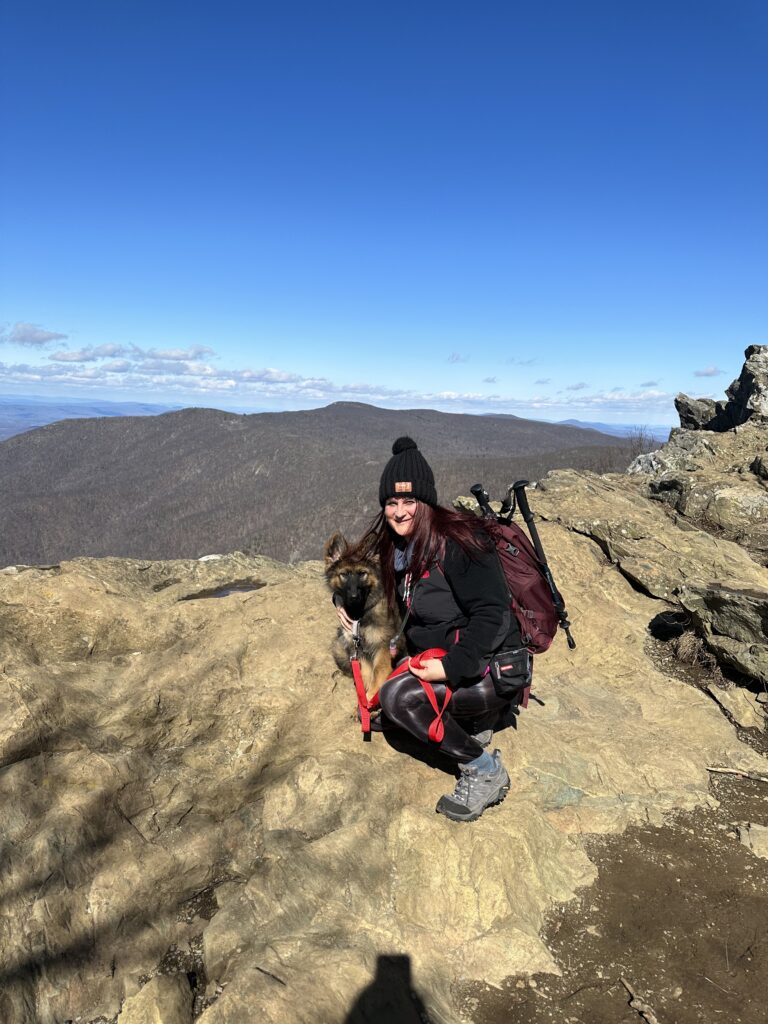
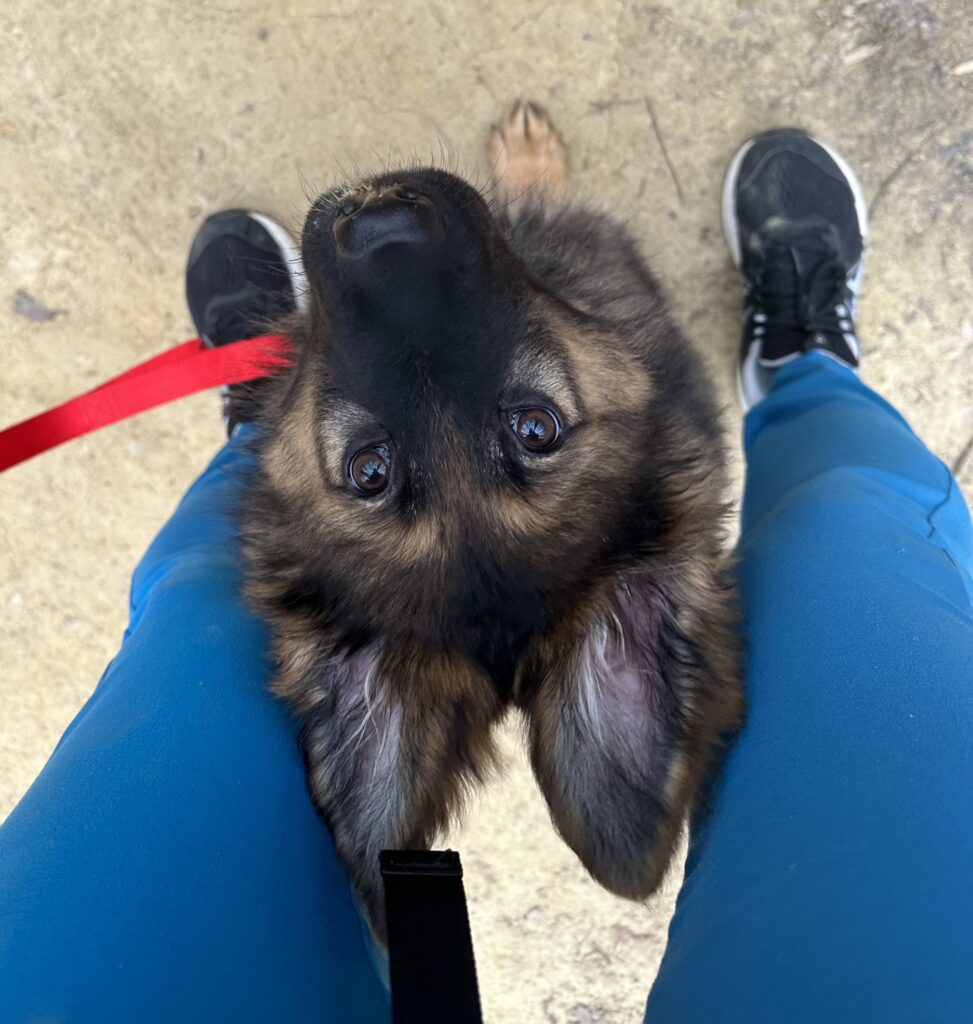
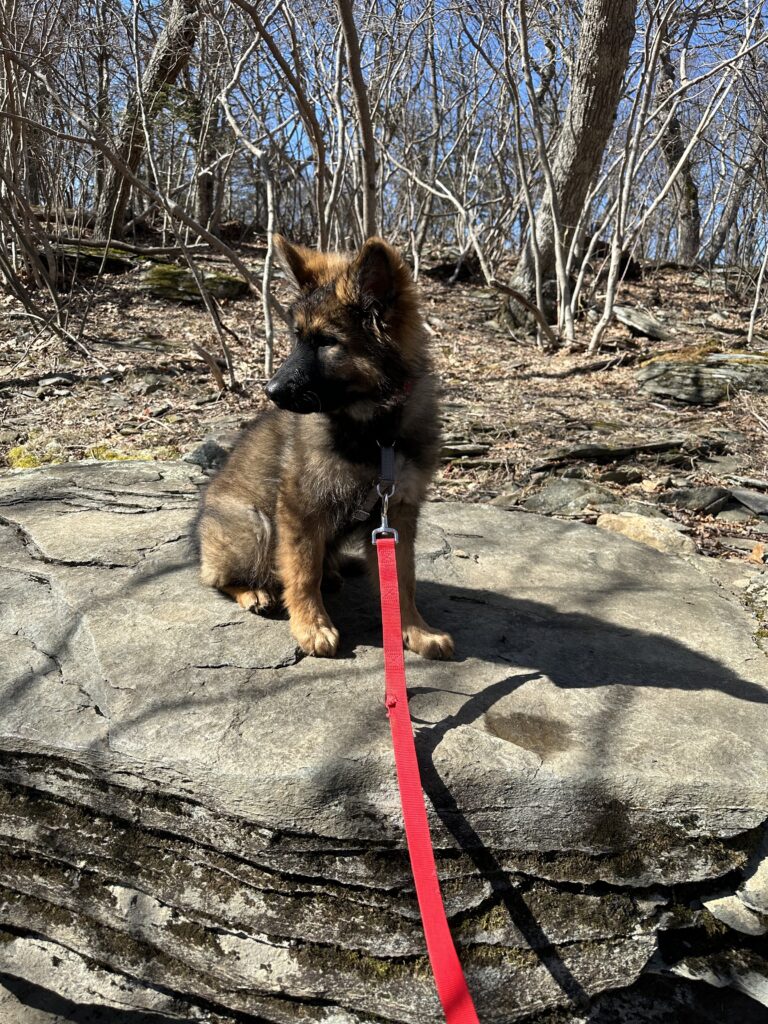
I hope that as you hike with your furbaby, you also take the time to slow down and savor the little moments that carry you to the summit. Enjoy the trees dancing in the wind, the birds singing, the deer quietly watching from the woods, and the hawk soaring above you at the top.
Adventures are meant to be lived right in the moment. And maybe—just maybe—your dog will remind you that slowing down is one of the best ways to live life fully.
If you’re ready to hit the trails, you might also enjoy our guide, Paws On the Ground, featuring the most beautiful dog-friendly trails in Virginia.
PIN IT FOR LATER!
I invite you to plan a hike with your dog. North and I would love to hear where you’re hiking next! Drop it in the comments below.
And if you want more dog-friendly adventures, don’t forget to subscribe to Adventures Beyond Boundaries – Chasing North.
